Creating a relaxing home workspace is essential for anyone looking to improve productivity while maintaining comfort. Whether you work remotely full-time or occasionally need a dedicated spot for focused tasks, your workspace environment can significantly affect how you feel and perform throughout the day. In this guide, we’ll explore practical steps to design a home workspace that not only boosts your efficiency but also keeps stress at bay.
Why a Relaxing Workspace Matters
A cluttered or uncomfortable environment can lead to distractions, fatigue, and decreased motivation. On the other hand, a thoughtfully arranged workspace can help you stay focused, reduce stress, and create a positive mindset. Comfort and productivity often go hand-in-hand—when your surroundings feel good, you are more likely to stay engaged and creative.
Step 1: Choose the Right Location
Your workspace should be in a spot that supports your work style and needs.
– Quiet and Private: Ideally, select a quiet area away from high-traffic zones in your home. Reducing noise and interruptions helps maintain concentration.
– Natural Light: Pick a place with enough natural light to reduce eye strain and improve mood.
– Space: Ensure there’s enough room for your desk, chair, and any necessary equipment without feeling cramped.
Step 2: Invest in Comfortable Furniture
Comfort is key when you spend hours working at your desk.
– Ergonomic Chair: Choose a chair that supports your back and encourages good posture. Adjustable height and lumbar support are important features.
– Desk Height: Your desk should suit your height and allow you to keep your elbows at a 90-degree angle when typing. Consider adjustable desks for sitting and standing options.
– Footrest: If your feet don’t rest flat on the floor, use a footrest to avoid strain.
Step 3: Organize and Declutter
A neat workspace encourages clear thinking and reduces stress.
– Storage Solutions: Use shelves, drawers, or desk organizers to keep supplies tidy and within reach.
– Minimalist Setup: Keep only essential items on your desk to avoid clutter.
– Cable Management: Use clips or cable boxes to keep cords organized and prevent tangling.
Step 4: Personalize Your Space
Adding personal touches can make your workspace inviting and motivational.
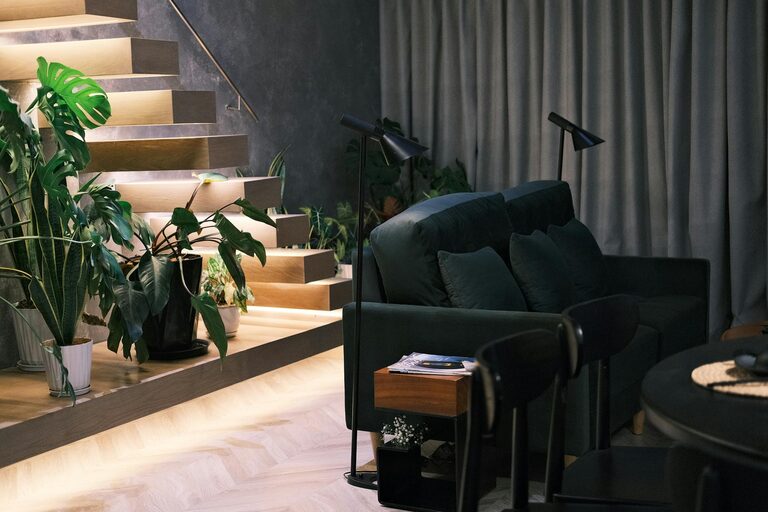
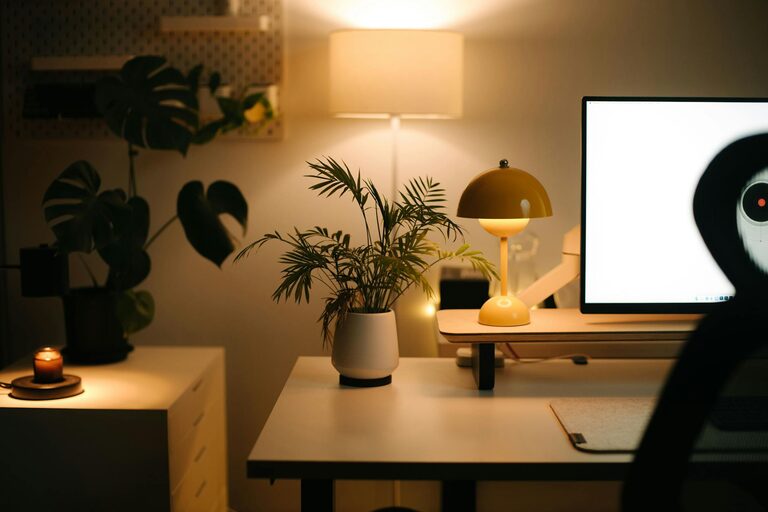
– Plants: Indoor plants improve air quality and add a touch of nature, which can enhance calmness and creativity.
– Artwork: Hang some inspiring images or quotes that motivate you.
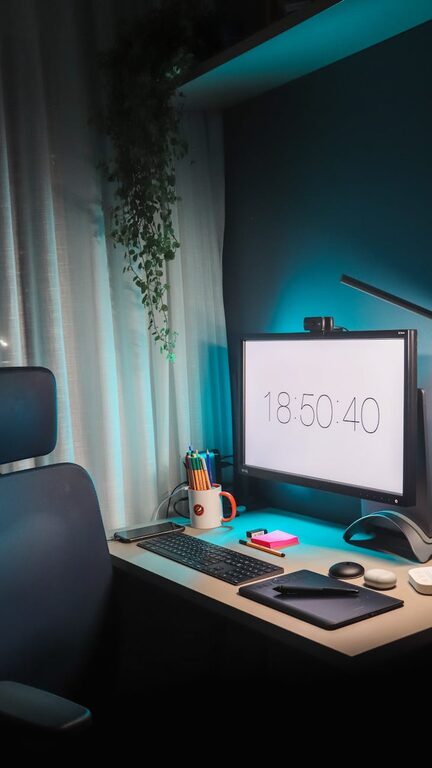
– Colors: Use soothing colors like blues or greens for your workspace décor. These shades tend to have a calming effect.
Step 5: Pay Attention to Lighting
Proper lighting reduces eye strain and helps maintain focus.
– Natural Light: Position your desk near a window if possible, but avoid glare on your computer screen.
– Task Lighting: Use adjustable desk lamps to brighten your work area, especially in the evenings.
– Ambient Lighting: Soft overhead lighting supports a comfortable atmosphere without harsh shadows.
Step 6: Incorporate Relaxation Techniques
To keep stress levels down during work hours, consider these relaxation strategies.
– Break Space: Designate an area where you can take short breaks away from your desk.
– Comfort Items: Keep items such as stress balls, a cozy blanket, or a seat cushion nearby.
– Aromatherapy: Use a subtle diffuser with calming scents like lavender or eucalyptus.
Step 7: Maintain Good Air Quality
Fresh air helps you stay alert and healthy.
– Ventilation: Open windows regularly or use an air purifier.
– Humidity: Maintain a comfortable humidity level to avoid dry eyes or respiratory discomfort.
Step 8: Establish a Routine
Lastly, a workspace is most effective when paired with a consistent routine.
– Set Work Hours: Define clear start and end times to create balance between work and relaxation.
– Daily Tidying: Spend a few minutes each day tidying your workspace to keep it inviting.
—
By following these steps, you can craft a relaxing home workspace that supports both your comfort and productivity. A well-thought-out environment makes it easier to stay focused while also reducing stress, helping you to feel your best during work hours and beyond. Remember, the goal is to create a space where you want to spend time—because when your workspace feels good, your work will too.